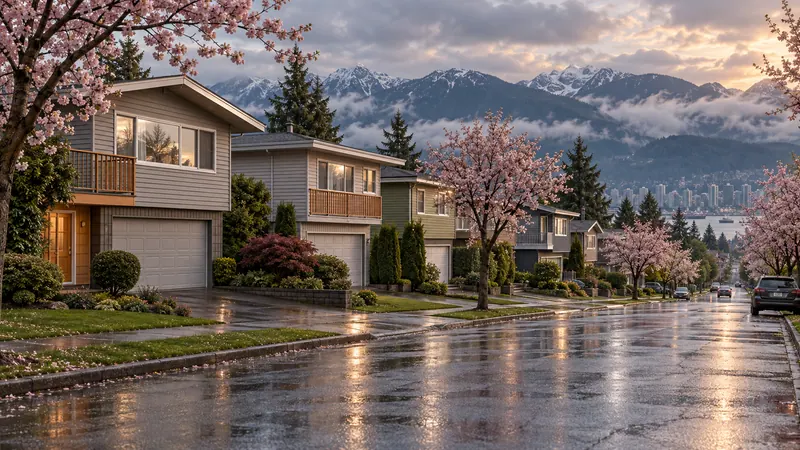
Vancouver & Lower Mainland, BC · City guide
Vancouver’s Complete Poly-B Replacement Guide
Polybutylene plumbing in Vancouver and the surrounding Metro Vancouver cities: how much housing dates from the poly-B years, what the regional water system does, and how permits, strata rules, prices and insurance work in British Columbia.
Critical Issue for Vancouver Homeowners
A 2025 industry release from a replacement contractor estimates that around 240,000 homes in the Lower Mainland contain poly-B.15 No public body has counted them, but the housing record points the same way. In the City of Vancouver, 83,160 of 305,335 occupied dwellings (27.2%) were built between 1981 and 2000, and several suburbs run higher: Port Coquitlam 40.7%, Surrey 36.9%, Coquitlam 36.2% and Richmond 35.4%.1
Those are homes built in the right years, not confirmed poly-B. Condominium apartments, townhouses and detached houses all qualify, and in a strata building the pipe question often belongs to the strata corporation as much as to the owner.
Vancouver and the region in figures
Build era
Why Vancouver Homes Are Severely Affected
1980s–1990s Building Boom. The City of Vancouver is an older city than most in this guide. The 2021 Census puts 62,225 of its occupied dwellings before 1961 and another 69,110 between 1961 and 1980, yet 35,990 date from 1981–1990 and 47,170 from 1991–2000.1 A replacement firm in the region says poly-B was popular in Vancouver home construction up until 1995.8
Several suburbs grew faster in those decades. Surrey has 68,530 dwellings from 1981–2000, 36.9% of its stock against Vancouver’s 27.2%, and in Port Coquitlam the two census periods cover 40.7% of the housing stock.1 Those numbers describe housing age, not confirmed pipe: some builders chose copper, and many homes have since been re-plumbed.
Fewer basements, harder access. Square One Insurance notes that a far smaller share of west coast homes have basements than on the Prairies, which makes pipes harder to reach and replacement more expensive.11
Affected Vancouver Neighborhoods
Neighbourhood-level construction years are not published as open data for most of the region, so this table compares whole municipalities using the 2021 Census count of occupied dwellings built 1981–2000. Each links to its community hub.
| Municipality | Occupied dwellings | Built 1981–2000 | Share |
|---|---|---|---|
| Port Coquitlam | 22,880 | 9,315 | 40.7% |
| Surrey | 185,670 | 68,530 | 36.9% |
| Coquitlam | 55,950 | 20,275 | 36.2% |
| Richmond | 81,080 | 28,695 | 35.4% |
| Burnaby | 101,135 | 28,700 | 28.4% |
| Delta | 38,055 | 10,645 | 28.0% |
| Vancouver | 305,335 | 83,160 | 27.2% |
| New Westminster | 36,095 | 9,720 | 26.9% |
| West Vancouver | 17,690 | 4,575 | 25.9% |
| North Vancouver (District and City) | 59,995 | 14,095 | 23.5% |
Source: Statistics Canada, 2021 Census Profile, 25% sample; counts are randomly rounded.1 Census periods do not line up exactly with poly-B’s 1978–1998 window.
Water utility
Metro Vancouver Water Quality
Metro Vancouver draws the region’s drinking water from three reservoirs, Capilano, Seymour and Coquitlam, and treats it at two plants. Capilano and Seymour water is filtered and exposed to ultraviolet light at the Seymour Capilano Filtration Plant; Coquitlam water is treated with ozone and UV.2 Chlorine is added during that primary stage, and because it breaks down as water travels through the mains, more is added along the way as a secondary disinfectant where needed.2
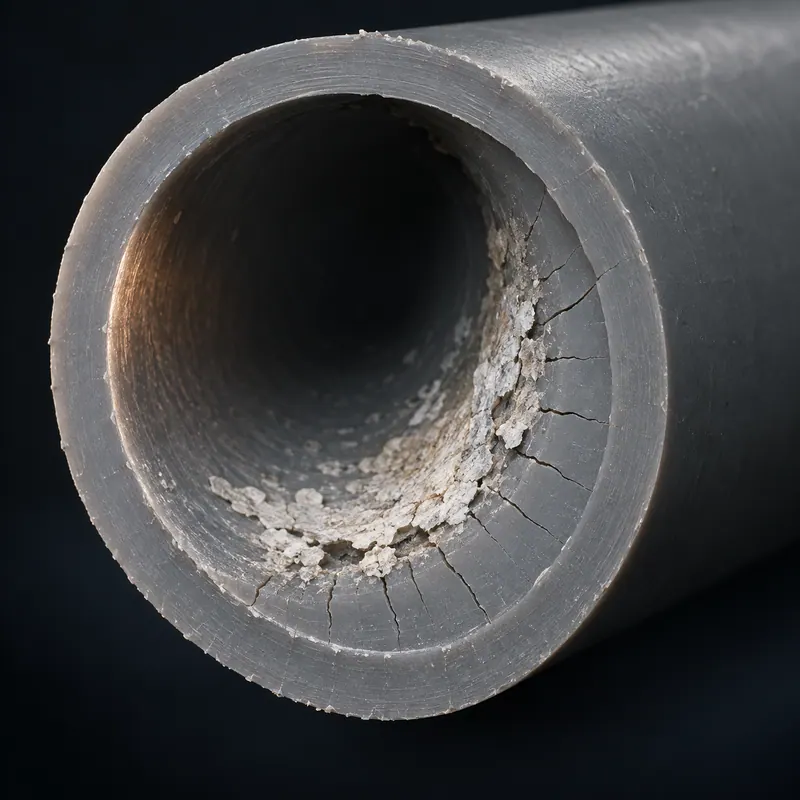
The regional utility notes that filtration means less chlorine is needed to keep the water safe in the pipes.2 That is good news, but it does not make poly-B safe: the Insurance Bureau of Canada lists the material’s reactivity with chlorine among the reasons it fails,14 and damage builds from the inside of the pipe wall, where nobody can see it.7
The water is also naturally acidic, coming from rain and snowmelt. Metro Vancouver has run a corrosion control program since the 1990s to protect copper pipes and hot water tanks, and in June 2021 it raised the pH and alkalinity again to make the water less corrosive.2 If you are choosing between PEX and copper for a replacement, ask how each contractor accounts for that history.
Metro Vancouver Replacement Costs
Published figures for the region, each from the business named. Treat them as advertised ranges rather than quotes: scopes vary, and none comes from HAUSE.
| Published by | Range | What it includes |
|---|---|---|
| Clearly Plumbing & Drainage8 | $6,000–$12,000 | Removing poly-B and installing PEX; about 2–3 days of plumbing |
| Clearly Plumbing & Drainage8 | $5,000–$10,000 more | Drywall repair; about 7–8 further days |
| Clearly Plumbing & Drainage8 | $11,000–$22,000 | The two together |
| Urban Piping repiping guide10 | $8,000–$15,000 | Average full-home repipe in Vancouver or Toronto, any pipe type |
| Urban Piping repiping guide10 | $3,500–$8,000 | Condos and townhomes, any pipe type, Canada-wide |
| Whyte Plumbing (archived, January 2024)9 | $2,000–$10,000 | Materials, labour, permits and inspections, Metro Vancouver |
The wide spread reflects scope. Ask every quote to state whether drywall, texture and paint are included. Estimate your own home with the cost calculator.
Permits in the City of Vancouver
Each Metro Vancouver municipality runs its own permits. These are the City of Vancouver’s rules; check with your own city hall if you live in Burnaby, Surrey, Richmond or elsewhere.
Know when a permit applies
The City requires a plumbing permit to install, change or upgrade any part of a plumbing system. Repairing leaks, clearing stoppages and replacing valves, faucets or fixtures in the same location do not need one.3 Replacing a house’s supply piping is a change to the system.
Who can apply
Applicants need a City of Vancouver or inter-municipal business licence. The exception is an owner doing plumbing work on a single detached home they own and live in.3
Check the tradesperson
Plumbing is not among the seven trades that BC currently makes compulsory under Skilled Trades Certification,17 so a business licence does not tell you whether the person holding the torch or crimper has trade papers. Ask each contractor who will do the work and what certification they hold.
Pay and wait
Fees are set in the City’s schedule and paid when you apply. The City aims to process applications that need no plan review by the next business day.3
Get it inspected
All permitted work must be inspected before the permit is finalized.3 Keep the final record: insurers and buyers will ask for it.
Strata
Strata properties: who owns the pipe?
In British Columbia the answer is written into the Strata Property Act. Pipes for water and other services count as common property when they sit inside a floor, wall or ceiling that separates two strata lots or a lot from common property, or when they run through a lot but are meant to serve another lot or the common property.4 A line that serves only your unit and sits entirely inside it may be yours; the strata plan and bylaws settle the details.
The standard bylaws require an owner to get the strata corporation’s written approval before altering common property, or parts of a strata lot the corporation must insure. The corporation may make its approval conditional on the owner taking responsibility for the costs.5 Many stratas have replaced the standard bylaws with their own, so read yours before booking a plumber.
There is a case for acting together. The Condominium Home Owners’ Association of BC has published the example of a townhouse strata that decided a single contract to replace every owner’s water lines was cheaper and more certain than 107 owners hiring separately, and had its lawyer draft a bylaw to do it.6 An engineering bulletin CHOA hosts describes re-piping with a chemically stable material such as PEX as the only permanent fix.7
Before you book a repipe in Metro Vancouver
A short list to work through with your household, your strata council if you have one, and each contractor you talk to.
0 of 8 checked
BC insurance
BC Insurance Requirements
Insurers in British Columbia set their own poly-B rules, and none of the major ones publishes a standard position. What BC sources describe:
- A Prince George home inspector warns that some BC insurers require poly-B to be removed regardless of how it was installed, and advises buyers to call their insurer before closing.12
- BC Housing tells owners that an insurer may exempt claims relating to poly-B or deny coverage, and recommends replacing it with copper or PEX.13
- A brokerage lists four possible responses: a premium surcharge, a replacement deadline, no water-damage coverage, or no property coverage.16
- A Vancouver-area plumbing firm says that since 2018 insurers have either charged much higher premiums or declined coverage.8
In a strata, remember there are two policies: the corporation’s building policy and your own unit policy. Ask both the strata manager and your broker what each one says about poly-B. BC Housing also recommends a pressure-reducing valve where water pressure exceeds 80 psi, and notes that basic leak sensors cost $10 to $150.13
The insurance guide compares what insurers and brokers across Canada report.
Vancouver and Metro community guides
- All City of Vancouver communities41 neighbourhood guides with the city-wide census profile
- Champlain Heights
- Killarney
- Fraserview
- Renfrew-Collingwood
- Kensington-Cedar Cottage
- Surrey hub68,530 dwellings from 1981–2000
- Burnaby hub28.4% built 1981–2000
- Coquitlam hub36.2% built 1981–2000
- Richmond hub35.4% built 1981–2000
- Port Coquitlam hub40.7%, the highest share of the cities in this table
HAUSE desk · Request
Get Replacement Quote
Tell us whether your home is a detached house, townhouse or strata apartment, where in Metro Vancouver it is, and roughly how big. The HAUSE desk replies with next steps and, where available and with your consent, a local contractor who can quote. For strata units, include whether the council has discussed a building-wide repipe.
- 01A person reads itThe HAUSE desk reviews the age of the home, what you found and how urgent it is.
- 02You get a replyBy email from info@hause.ca or by phone from 403-679-3100, with practical next steps.
- 03Matched where availableWith your consent, your request goes to a local replacement contractor so they can quote.
- 04You decideNo obligation. Use the guides and the cost calculator to compare what you are quoted.
Questions · 6
Frequently asked questions
How do I know if my Vancouver home has poly-B plumbing?
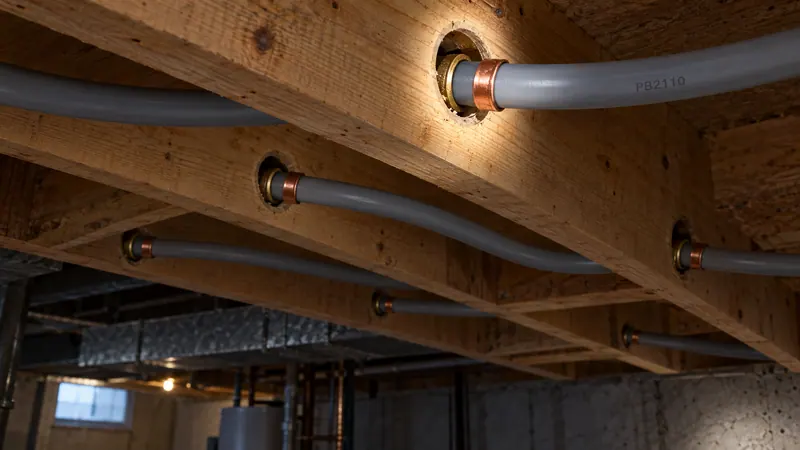
Start with the construction date; homes built from the late 1970s to the late 1990s are the ones to check.16 Then look where pipes are exposed: at the water heater, the main shut-off, under sinks, or in a crawl space or unfinished basement. Poly-B is flexible grey plastic, often printed PB2110. A plumber or home inspector can confirm it, and the identification guide shows each spot.
What makes Vancouver’s poly-B situation different from other cities?
Three things. Fewer homes have basements, so reaching the pipes costs more than on the Prairies.11 Much of the housing is strata, where the Strata Property Act decides which pipes are common property.4 And the regional water is naturally acidic, which Metro Vancouver has treated since the 1990s to protect copper plumbing.2
Do I need strata council approval for replacement?
Usually. Under the standard bylaws an owner needs the strata corporation’s written approval before altering common property or parts of a strata lot the corporation must insure, and supply pipes inside boundary walls are common property.54 BC Housing likewise advises getting written permission from the strata corporation before a professional alters the plumbing.13 Your strata may also set its own conditions, so ask the council or manager in writing before you book work.
Should I choose PEX or copper for Vancouver?
Both are used. One repiping guide prices PEX at $4 to $8 per linear foot of material and copper at $10 to $20, with copper also taking longer because joints are soldered.10 Copper in Metro Vancouver has a history of corrosion from acidic water, which the region has been treating since the 1990s.2 Ask each contractor to explain their choice for your building.
Will replacing poly-B increase my home’s value in Vancouver’s market?
It removes a problem a buyer’s inspector is likely to flag. One Vancouver-area plumbing firm suggests buyers may seek $20,000 to $30,000 off a listing price when poly-B is found; treat that as one contractor’s view.8 Replacement records also answer the insurance question before it delays a sale.
Do I need a permit to replace poly-B in Vancouver?
Yes. The City of Vancouver requires a plumbing permit to change any part of a plumbing system, and all permitted work must be inspected.3 Unless you are doing the work yourself in a single detached home you own and live in, the permit is taken out by a business with a City or inter-municipal licence.
Sources
- Statistics Canada — 2021 Census Profile (98-316-X2021001): occupied private dwellings by period of construction, Metro Vancouver municipalities · accessed 2026-09-28
- Metro Vancouver — Water Treatment and Facilities · accessed 2026-09-28
- City of Vancouver — Plumbing permit (archived copy, 9 February 2026) · accessed 2026-09-28
- Strata Property Act, SBC 1998, c. 43, section 1 (definition of common property) · accessed 2026-09-28
- Strata Property Act — Schedule of Standard Bylaws, sections 5 and 6 · accessed 2026-09-28
- Condominium Home Owners’ Association of BC — Condo Smarts: Service lines and strata (Tony Gioventu, 9 December 2012) · accessed 2026-09-28
- BFL Canada Risk Control Engineering — Ask an Engineer No. 17: Polybutylene Piping Systems (March 2020), hosted by CHOA · accessed 2026-09-28
- Clearly Plumbing & Drainage — Is Poly B Piping Covered by Home Insurance? · accessed 2026-09-28
- Whyte Plumbing — Signs you need a poly b pipe replacement (Internet Archive copy, 23 January 2024) · accessed 2026-09-28
- Urban Piping — House Repiping Cost Guide (2026) · accessed 2026-09-28
- Square One Insurance — Poly-B plumbing: common issues, maintenance and more · accessed 2026-09-28
- Premium Home Inspections (Prince George, BC) — Poly-B Water Supply Piping · accessed 2026-09-28
- BC Housing — Maintenance Matters No. 21: Preventing Water Leaks in Your Home · accessed 2026-09-28
- Insurance Bureau of Canada — Know your home’s history and the potential issues lurking within its walls (25 June 2025) · accessed 2026-09-28
- Urban Piping via Newsfile — national poly-B replacement initiative release (2 October 2025) · accessed 2026-09-28
- Westland Insurance — Has your broker asked if you have Polybutylene (Poly-B) plumbing? (7 September 2023) · accessed 2026-09-28
- SkilledTradesBC — Skilled Trades Certification (compulsory trades) · accessed 2026-09-28
Keep going
Related guides
 Field guide · IdentificationThat grey pipe. Is it Poly-B?
 Repipe · Cost · OptionsReplacement Options & Cost Calculator
 Coverage · Disclosure · RenewalAsk your insurer. Keep the answer.
 Toronto & Greater Toronto Area, ON · City guideToronto & GTA’s Complete Poly-B GuideBritish Columbia · City hubPoly-B Replacement in Vancouver, BC
Updated 2026-09-28