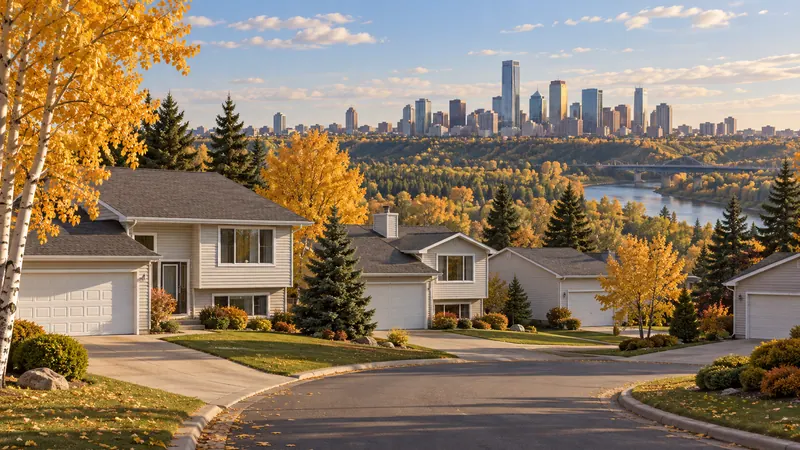
Edmonton, Alberta · City guide
Edmonton’s Complete Poly-B Replacement Guide
What Edmonton homeowners need to know about polybutylene plumbing: where it was built in, how the city’s water and winters fit the picture, and how permits, prices and insurance work here.
Edmonton’s Poly-B Challenge
Roughly one Edmonton home in five was built during the poly-B years. The City’s current assessment roll gives 77,990 of 358,507 residential properties (21.8%) a construction year between 1978 and 1998,2 and the 2021 Census puts 20.9% of occupied dwellings in the 1981–2000 periods.1
Nobody has counted the pipes themselves. A Calgary replacement firm’s 2025 release estimates about 28,000 affected Edmonton homes,8 far fewer than were built in the window, and Alberta’s Municipal Affairs department calls its own province-wide figure of about 148,000 homes an unconfirmed estimate.7 Treat every total as a rough guide and the pipe in your utility room as the only answer that counts.
Edmonton at a glance
Build era
Why Edmonton Has Widespread Poly-B
Two booms, one gap. Edmonton’s assessment roll shows 53,502 homes from the 1970s, then 33,760 from the 1980s and 30,637 from the 1990s, before building picked up again with 65,864 in the 2000s and 72,249 in the 2010s.2 The poly-B decades were a slower stretch between two much larger waves of construction, which is why the city’s share sits a little below Calgary’s. The census shows the same shape: 110,385 occupied dwellings date from 1961–1980, against 43,560 from 1981–1990 and 39,315 from 1991–2000.1
Where the poly-B-era homes are. They are not concentrated in one quadrant. The City’s neighbourhood records describe Hairsine as developed in the 1970s and 1980s as part of Clareview, Dechene’s crescents as mostly dating from the 1980s, and Twin Brooks, annexed in 1980, as seeing its first residential construction in the late 1980s.3 Tawa, the northern half of Mill Woods Town Centre, was built from the 1990s into the early 2000s.3
A correction to older lists. Several neighbourhoods often named as poly-B hot spots were built after it left the code. Rutherford’s median build year is 2006, Silver Berry’s 2005, Ellerslie’s 2004 and Summerside’s 2011, and almost none of their homes fall inside 1978–1998.2 Houses there are far more likely to have PEX. Riverbend and Terwillegar could not be matched to a single City neighbourhood, so check the build year of the individual house.
High-Risk Edmonton Neighborhoods
Edmonton neighbourhoods with community guides, ranked by the share of residential properties on the City roll built 1978–1998, with the City district each belongs to.
| Neighbourhood | City district | Residential properties | Built 1978–1998 | Share | Median year |
|---|---|---|---|---|---|
| Hairsine | Northeast | 824 | 824 | 100% | 1979 |
| Skyrattler | Whitemud | 945 | 945 | 100% | 1979 |
| Minchau | Mill Woods and Meadows | 998 | 993 | 99.5% | 1981 |
| La Perle | West Edmonton | 1,630 | 1,601 | 98.2% | 1982 |
| Meyokumin | Mill Woods and Meadows | 937 | 853 | 91.0% | 1979 |
| Twin Brooks | Whitemud | 2,309 | 1,892 | 81.9% | 1995 |
| Dechene | West Edmonton | 597 | 477 | 79.9% | 1987 |
| Tawa | Mill Woods and Meadows | 866 | 586 | 67.7% | 1993 |
| Carlisle | Northwest | 1,085 | 669 | 61.7% | 1978 |
| Mill Woods Town Centre | Mill Woods and Meadows | 480 | 247 | 51.5% | 1995 |
| Callingwood South | West Edmonton | 1,283 | 582 | 45.4% | 1988 |
Sources: City of Edmonton assessment and property information2 and neighbourhood records.3 Each condominium unit is a separate account; accounts under 30 m² (parking stalls and storage) are excluded. Only neighbourhoods with a guide on this site are listed.
Water utility
What comes out of an Edmonton tap
EPCOR runs Edmonton’s two treatment plants. E.L. Smith mainly supplies the northwest, west, southwest and University area; Rossdale mainly supplies downtown and the east, northeast and southeast, with a large crossover zone that either plant can serve on a given day.5 Both draw on the North Saskatchewan River, which EPCOR describes as moderately hard, averaging about 165 mg/L as calcium carbonate.5
Unlike Calgary, Edmonton’s distribution system carries chloramine. EPCOR says the total chlorine residual in its pipes is made up entirely of chloramine, formed when chlorine is combined with ammonia. It describes chloramine as a weaker disinfectant than free chlorine that lasts longer and is more stable in the network, and it states approved residual limits of 0.5 to 2.5 mg/L.5
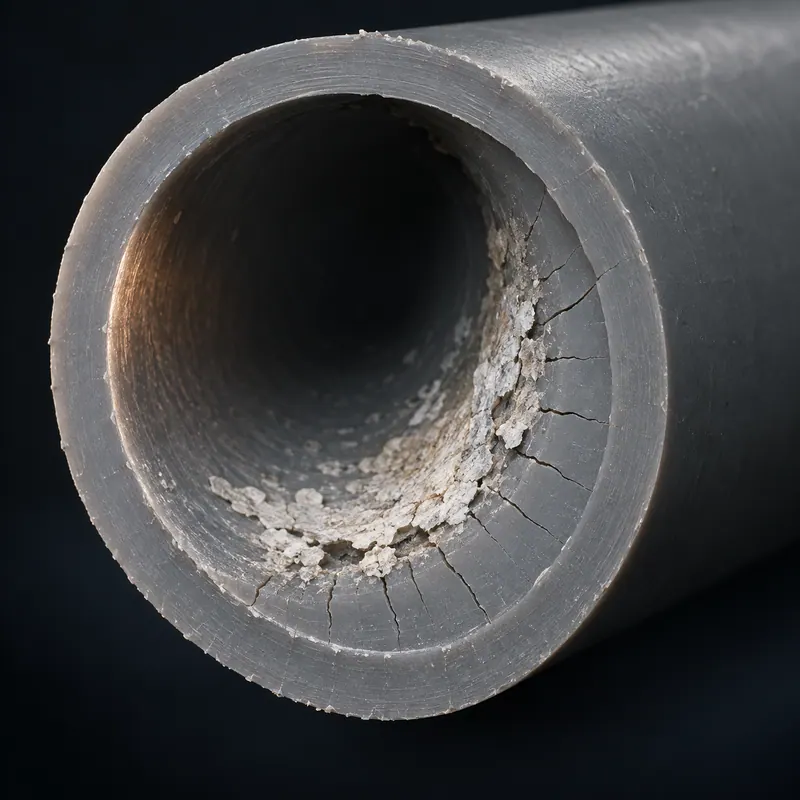
Poly-B’s published weak point is oxidation by disinfectant. The Insurance Bureau of Canada cites its reactivity with chlorine in water,15 and an insurance engineering bulletin describes degradation that begins on the inner wall.16 Those sources speak of chlorine in general and do not separate the free and combined forms, so no source we opened says Edmonton’s water is gentler or harsher on poly-B than any other city’s.
Climate
Does Edmonton’s Climate Accelerate Poly-B Failure?
Temperature swings. Edmonton winters are hard on anything outdoors, but supply lines live inside heated walls and floors. We found no study or insurer data showing that cold weather in itself shortens poly-B’s life. The better-supported stresses are hot water, disinfectant and pressure: a risk-engineering bulletin from broker BFL Canada recommends running poly-B below 60 psi and at 55–60 °C to slow its decline.16
Freeze risk. Where cold does matter is at the edges of a house: a line along an exterior wall, in a garage, or feeding an outside tap. That risk applies to every material, which is why the choice of replacement pipe matters here. PEX is flexible and freeze-resistant, according to one national repiping guide,11 while an Edmonton plumber notes that copper can freeze and burst in extreme cold without insulation.9
Winter work. Nearly all of a repipe happens indoors, so season is less important than a leak, an insurance deadline or a sale date. If a job runs in January, ask how long the water will be off each day and whether any exterior hose bibs are being replaced.
Edmonton Replacement Costs
Figures published for Edmonton by the businesses named. They are marketing estimates with different scopes, not HAUSE quotes.
| Published by | Figure | Scope |
|---|---|---|
| Kingstree Plumbing (Edmonton)9 | $10,000–$20,000 | Whole-home replacement in a typical single-family house |
| Kingstree Plumbing9 | from about $1,500 | Partial replacement |
| ATCO Energy home services10 | $5,000–$15,000 or more | Re-piping a home; offered in Edmonton, Calgary, Fort McMurray and Red Deer |
| Urban Piping repiping guide11 | $5,500–$12,000 | Full-home repipes of any pipe type in Calgary and Edmonton |
| Kingstree Plumbing9 | $100–$500 permits; $150–$300 inspections | Municipal permits and inspection fees |
| Kingstree Plumbing9 | $200–$800 | Drywall repairs |
The City’s own residential plumbing permit fee is lower than most contractor allowances; see the permit steps below. Estimate your house in the cost calculator.
Permits and inspections in Edmonton
How the City of Edmonton handles plumbing permits for existing homes.
Check whether the work needs a permit
The City says a plumbing permit is required under Alberta’s Safety Codes Act when plumbing such as water piping is installed or altered. Only maintenance, meaning like-for-like repair or replacement of worn parts that stays in the same place, is exempt.4
Apply the right way
A plumbing-only job gets a stand-alone plumbing permit; if the project also includes other interior or exterior alterations, the plumbing permit goes in with the building permit. Email and drop-off applications need a drawing of the piping layout with fitting descriptions and sizes.4
Pay the fee
For residential plumbing outside new-home construction the City charges $120 per address or unit, plus a safety code fee of at least $4.80.4
Book the inspections
Required inspections appear in the City’s SelfServe portal once the permit is issued, or can be booked through 311. The City warns that skipping one may mean removing finished walls later, so do not close up before the inspector has been.4
Alberta insurance
Alberta Insurance Requirements
There is no single Alberta rule for poly-B; each insurer sets its own. What brokers and industry sources describe is a range of responses. Westland Insurance lists a premium surcharge, a deadline to replace, a refusal to cover water damage, or a refusal to cover the property.12 Armour Insurance says a certified plumbing inspection is needed before a poly-B home can be insured,13 and the Alberta REALTORS® Association notes that some insurers will allow time for replacement when flood detection or an automatic shut-off valve is installed.6
Some contractors go further. A Calgary firm names Intact, Aviva, Co-operators, TD Insurance and Wawanesa as requiring full removal within 12 to 24 months,14 and an Edmonton firm says some insurers want replacement before they will provide coverage.9 Those are contractors’ statements, not insurer policies. Ask your insurer directly and get the answer in writing.
- Disclosure: answer the poly-B question on every application truthfully
- Inspection: keep the report and photos of the pipe print and fittings
- Deadlines: if you are given one, confirm what counts as complete replacement
- Afterwards: send your insurer the invoice and the City permit record
The insurance guide covers what brokers across Canada report.
Condos, sales and older infill in Edmonton
Several of the highest-share neighbourhoods are built around attached housing. The City describes Hairsine as dominated by row housing and low-rise apartments, and says 36% of Skyrattler’s homes are row houses and 45% low-rise apartments.3 In a condominium, the supply lines may belong to the unit or to the corporation, so ask the board or property manager before collecting quotes and find out whether a building-wide replacement is already being planned.
For detached houses in neighbourhoods such as Meyokumin, where the City says single-family homes make up over 85% of dwellings,3 the decision sits with the owner. Kingstree Plumbing reports that buyers often ask for replacement as a condition of sale or negotiate a lower price.9 The Alberta REALTORS® Association recommends a condition in the offer that allows time for advice and quotes.6
Don’t rule out older houses either. Provincial guidance says a home built before 1975 would contain poly-B only if its plumbing was renovated later,7 so a renovated older bungalow deserves the same look as a 1990s split-level.
Edmonton neighbourhood guides
- All Edmonton neighbourhoodsEvery guide, sortable by share of homes built 1978–1998
- HairsineNortheast · 100% built 1978–1998
- SkyrattlerWhitemud · 100%
- MinchauMill Woods and Meadows · 99.5%
- La PerleWest Edmonton · 98.2%
- MeyokuminMill Woods and Meadows · 91.0%
- Twin BrooksWhitemud · 1,892 homes in the window
- DecheneWest Edmonton · 79.9%
- TawaMill Woods and Meadows · 67.7%
- CarlisleNorthwest · 61.7%
- Mill Woods Town Centre51.5% · median year 1995
HAUSE desk · Request
Get Replacement Quote
Send the basics about your Edmonton home — neighbourhood, size, bathrooms, and whether the basement ceiling is open or finished. The HAUSE desk answers with next steps and, where available and with your consent, puts you in touch with a local contractor who can quote.
- 01A person reads itThe HAUSE desk reviews the age of the home, what you found and how urgent it is.
- 02You get a replyBy email from info@hause.ca or by phone from 403-679-3100, with practical next steps.
- 03Matched where availableWith your consent, your request goes to a local replacement contractor so they can quote.
- 04You decideNo obligation. Use the guides and the cost calculator to compare what you are quoted.
Questions · 6
Frequently asked questions
Should I replace poly-B before or after winter in Edmonton?
Whenever it suits your circumstances; no Edmonton source sets a best season. A repipe is almost entirely indoor work. Let the deciding factors be an active leak, an insurer’s deadline or a sale date rather than the calendar, and ask the contractor how long the water will be off each day.
Is PEX suitable for Edmonton’s extreme cold?
PEX is the usual replacement choice and is described as flexible and freeze-resistant.11 That does not make any pipe safe in an unheated space: lines in exterior walls, garages or crawl spaces still need protection. An Edmonton plumber notes that copper can freeze and burst in extreme cold if it is not insulated.9
How do I know if my Edmonton home has poly-B?
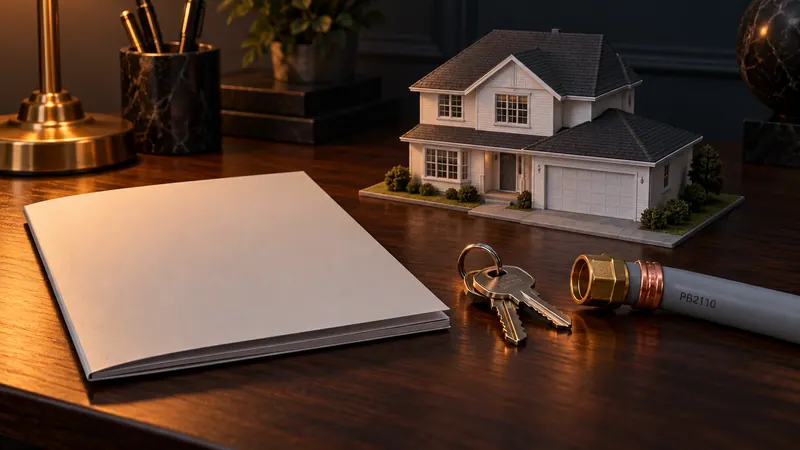
Look up the build year first: the City’s property information records it, and 1978–1998 is the range to check.2 Then look at the exposed supply lines in the mechanical room or basement for flexible grey plastic, often printed PB2110 and joined with copper crimp rings.6 A plumber or home inspector can confirm the material and extent. The identification guide walks through each room.
Will replacement increase my home’s value in Edmonton’s market?
It removes a common objection. Kingstree Plumbing says buyers often request replacement as a condition of sale or negotiate the price down,9 and ATCO says buyers often see a re-piped system as a valuable upgrade.10 No source we opened publishes a reliable dollar figure for the difference, so treat any specific number with caution.
Do I need permits for poly-B replacement in Edmonton?
Yes. Installing or altering water piping requires a plumbing permit under the Safety Codes Act, and the fee for an existing home is $120 per address or unit plus a safety code fee of at least $4.80.4 Your contractor normally applies for it; a homeowner permit is only for owners who live in the house and do the work themselves.
Is Edmonton’s water treated differently from Calgary’s?
Sources
- Statistics Canada — 2021 Census Profile (98-316-X2021001): occupied private dwellings by period of construction, Edmonton · accessed 2026-09-28
- City of Edmonton Open Data — Property Information (Current Calendar Year), joined to Property Assessment Data · accessed 2026-09-28
- City of Edmonton Open Data — City of Edmonton Neighbourhoods (districts and descriptions) · accessed 2026-09-28
- City of Edmonton — Plumbing Permits, Residential · accessed 2026-09-28
- EPCOR — Daily Water Quality, Edmonton · accessed 2026-09-28
- Alberta REALTORS® Association — What should I know about Poly-B piping in homes? (Bryan Statt, 16 January 2025) · accessed 2026-09-28
- Government of Alberta, Municipal Affairs — Safety Tips: Polybutylene (Poly-B) Pressure Water Piping (reviewed August 2016) · accessed 2026-09-28
- Urban Piping via Newsfile — national poly-B replacement initiative release (2 October 2025) · accessed 2026-09-28
- Kingstree Plumbing (Edmonton) — Replacing Poly B Piping: Essential Guide for Canadian Homeowners (10 July 2025) · accessed 2026-09-28
- ATCO Energy — Poly B Replacement, Alberta home services · accessed 2026-09-28
- Urban Piping — House Repiping Cost Guide (2026) · accessed 2026-09-28
- Westland Insurance — Has your broker asked if you have Polybutylene (Poly-B) plumbing? (7 September 2023) · accessed 2026-09-28
- Armour Insurance — How to identify the type of plumbing your home uses · accessed 2026-09-28
- Urban Piping — Poly B replacement in Calgary: process, packages and insurance FAQ · accessed 2026-09-28
- Insurance Bureau of Canada — Know your home’s history and the potential issues lurking within its walls (25 June 2025) · accessed 2026-09-28
- BFL Canada Risk Control Engineering — Ask an Engineer No. 17: Polybutylene Piping Systems (March 2020), hosted by CHOA · accessed 2026-09-28
- alis (Government of Alberta) — Plumber: certifications in Alberta · accessed 2026-09-28
- City of Calgary — Water quality, water hardness and water data · accessed 2026-09-28
Keep going
Related guides
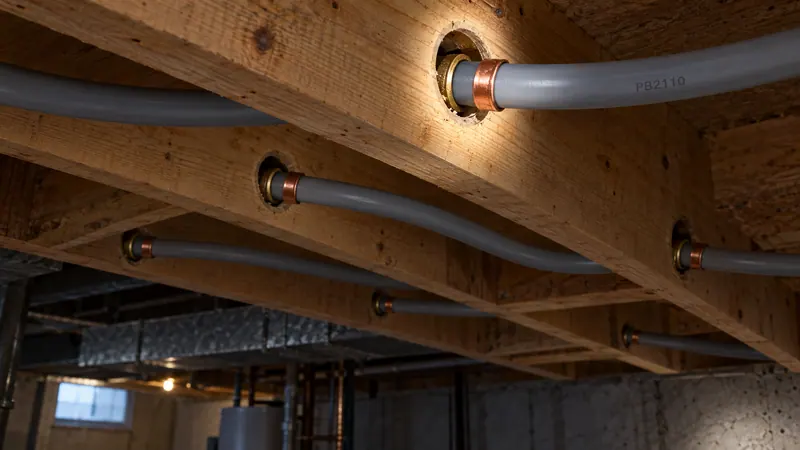 Field guide · IdentificationThat grey pipe. Is it Poly-B?
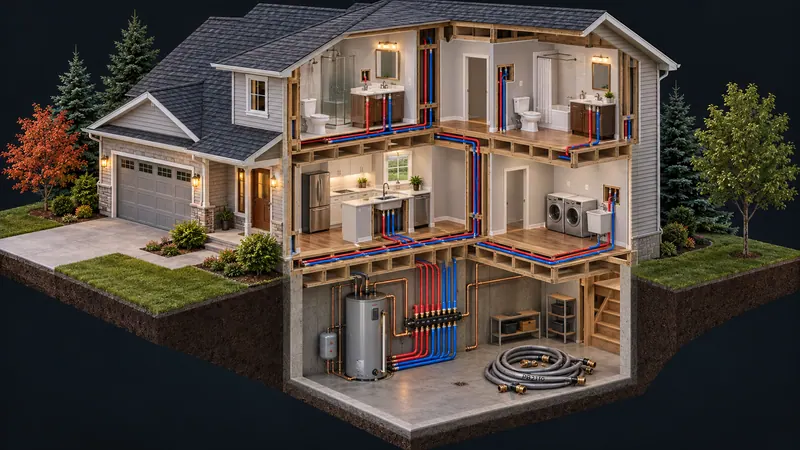 Repipe · Cost · OptionsReplacement Options & Cost Calculator
 Coverage · Disclosure · RenewalAsk your insurer. Keep the answer.
 Calgary, Alberta · City guidePoly-B Replacement Services in CalgaryAlberta · City hubPoly-B Replacement in Edmonton, AB
Updated 2026-09-28