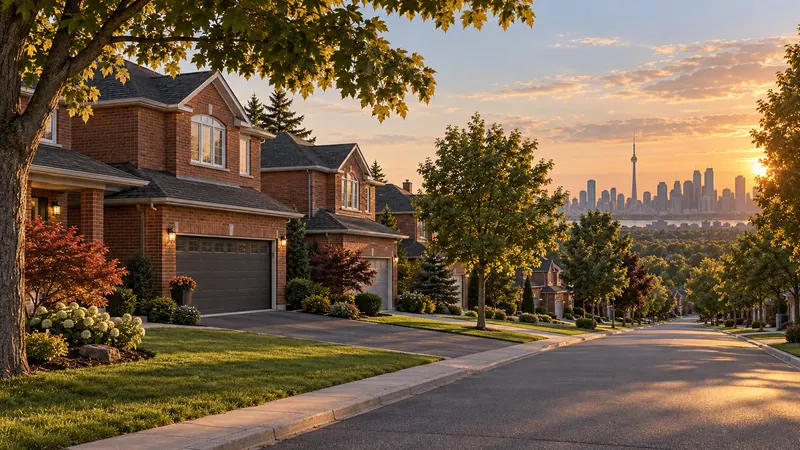
Toronto & Greater Toronto Area, ON · City guide
Toronto & GTA’s Complete Poly-B Guide
Where the Greater Toronto Area’s poly-B-era housing actually is, what Toronto Building requires for a repipe, how condo responsibilities split, and what published prices and insurers say.
GTA’s Massive Poly-B Challenge
The size of the GTA’s poly-B problem comes from scale rather than share. Only 17.5% of the City of Toronto’s occupied dwellings were built between 1981 and 2000, yet that is 202,765 homes, more than in any other city in this guide.1 The 905 suburbs have far higher shares: 42.1% of Vaughan’s dwellings, 40.5% of Richmond Hill’s and 38.7% of Mississauga’s date from those two decades.1
Inside the city, the five neighbourhoods with the highest shares — Milliken, Highland Creek, Steeles, West Rouge and Malvern East — each have close to half or more of their homes from 1981–2000.2 A build year tells you where to look; only the pipe confirms poly-B.
The GTA in numbers
Build era
Why the GTA Has Widespread Poly-B
1980s–1990s Suburban Explosion. The City of Toronto is mostly older than poly-B: 340,185 of its occupied dwellings date from 1960 or before and 333,990 from 1961–1980, together about 58% of the stock.1 The growth of the 1980s and 1990s went outward. Vaughan counts 43,780 dwellings from 1981–2000, Mississauga 94,700, Brampton 51,545 and Markham 37,835.1 An Alberta utility’s home-services arm dates poly-B’s popularity to 1978–1995,11 and resin production ended in 1998.10
A certified material at the time. Poly-B was tested and certified by the Canadian Standards Association and accepted for water systems while it was sold.10 Codes are not retroactive, so a house plumbed with it was not built wrong; but with resin production ending in 1998, even the youngest systems are now more than 25 years old. Ontario homeowners were part of a class action in the Ontario Superior Court. Under the Shell settlement, claims had to be postmarked by June 18, 2005, and DuPont’s settlement paid 25% of the cost of a replumb for eligible indoor systems.9 Those settlements are years old, and today the cost of replacement falls on owners.
Where the inspection conversation starts. In a 2010 release, TD Insurance’s chief underwriter advised buyers to take a closer look at any item in a home inspection report their insurer isn’t comfortable with, and listed outdated plumbing among the things that can affect premiums and eligibility.17
High-Risk GTA Neighborhoods
Toronto neighbourhoods with the highest share of occupied dwellings built 1981–2000, from the City’s 2021 Neighbourhood Profiles. Shares are calculated from census counts that are randomly rounded.
| Toronto neighbourhood (City name) | Occupied dwellings | Built 1981–2000 | Share |
|---|---|---|---|
| Milliken | 7,585 | 5,140 | 67.8% |
| Highland Creek | 3,795 | 2,365 | 62.3% |
| Steeles | 7,865 | 4,405 | 56.0% |
| West Rouge | 7,025 | 3,460 | 49.3% |
| Malvern East | 8,565 | 4,090 | 47.8% |
| Yonge-Doris | 9,845 | 3,610 | 36.7% |
| Newtonbrook East | 6,165 | 2,260 | 36.7% |
| Mount Olive-Silverstone-Jamestown | 9,740 | 3,540 | 36.3% |
| West Humber-Clairville | 10,700 | 3,705 | 34.6% |
| Centennial Scarborough | 4,420 | 1,515 | 34.3% |
| East Willowdale | 5,610 | 1,775 | 31.6% |
| Agincourt North | 9,090 | 2,745 | 30.2% |
Source: City of Toronto Open Data, Neighbourhood Profiles (2021 Census, 158-neighbourhood model).2 Community guides on this site use traditional names, so Agincourt, Willowdale and Rexdale each span more than one City neighbourhood.
The 905: GTA municipalities by build era
Share of occupied dwellings built 1981–2000 in each GTA municipality with a hub on this site, from the 2021 Census.
| Municipality | Occupied dwellings | Built 1981–2000 | Share |
|---|---|---|---|
| Vaughan | 103,915 | 43,780 | 42.1% |
| Richmond Hill | 69,315 | 28,090 | 40.5% |
| Mississauga | 244,575 | 94,700 | 38.7% |
| Oakville | 73,560 | 25,510 | 34.7% |
| Markham | 110,865 | 37,835 | 34.1% |
| Brampton | 182,475 | 51,545 | 28.2% |
| Burlington | 73,180 | 20,630 | 28.2% |
| Toronto | 1,160,890 | 202,765 | 17.5% |
Source: Statistics Canada, 2021 Census Profile, 25% sample.1 The census reports construction in fixed periods, so 1981–2000 stands in for poly-B’s 1978–1998 years.
Correcting the old neighbourhood lists
Lists of “poly-B neighbourhoods” often name the whole of Etobicoke or North York. The census does not support that. Kingsway South has just 8.4% of its homes from 1981–2000 and Markland Wood 5.2%; Bayview Village sits at 9.9%, and Wexford/Maryvale at 12.4%.2 Few of their homes date from the poly-B decades.
The Scarborough names on those lists hold up better. West Rouge, Malvern East and Malvern West, Agincourt North and Woburn North all have more than a quarter of their dwellings from the poly-B decades.2 So does Mount Olive-Silverstone-Jamestown, at 36.3%. Older houses anywhere can still carry poly-B from a renovation, so a low share means “less likely”, not “no”.
Water utility
Toronto’s water: chlorine, then chloramine
Toronto’s drinking water system runs four treatment plants: F.J. Horgan, R.C. Harris, R.L. Clark and the Island plant.5 Chlorine and aqua ammonia both appear on the list of treatment chemicals the City reported for 2025,5 and its distribution-system testing reports the disinfectant residual as total chlorine in the form of chloramines.6 In practice that means water reaching a Toronto house carries chloramine rather than free chlorine.
The Insurance Bureau of Canada lists chlorine reactivity among poly-B’s weaknesses,16 and a risk-engineering bulletin describes the resulting damage starting on the inside of the pipe wall, out of sight.19 Those sources do not distinguish free chlorine from chloramine. Nothing we opened suggests Toronto’s water treatment makes poly-B safer or riskier than anywhere else, and the same bulletin’s advice applies: keep pressure below 60 psi and hot water at 55–60 °C to slow the decline.19
GTA Replacement Cost Breakdown
No Toronto firm we could open publishes a poly-B-specific price, so this table combines a Toronto repiping average with Ontario and national poly-B figures. Each belongs to the business named; none is a HAUSE quote.
| Published by | Range | Scope |
|---|---|---|
| Urban Piping repiping guide12 | $8,000–$15,000 | Average full-home repipe in Toronto or Vancouver, any pipe type |
| Urban Piping repiping guide12 | $3,500–$8,000 | Condos and townhomes, Canada-wide |
| PatchBoyz (Ottawa)13 | $9,000–$15,000 | Plumbing only for an Ottawa home; about 2–3 days |
| PatchBoyz (Ottawa)13 | $2,000–$6,000 | Drywall repair afterwards; stipple ceilings cost more |
| Square One Insurance14 | $3,000–$25,000 | Average range to replace poly-B in a Canadian home |
Ask every quote to spell out what is included: materials, labour, the permit and inspections, drywall, texture and paint, clean-up, and new shut-off valves. Try the cost calculator for your house.
Toronto permits, step by step
What Toronto Building says about plumbing work in an existing home.
Does it need a permit?
The City lists installing or modifying plumbing systems among the work that requires a building permit. Repairing and replacing plumbing fixtures does not.3 Replacing the supply piping throughout a house changes the system itself.
Stand-alone plumbing permit
Plumbing work that is not part of other construction gets a stand-alone plumbing permit, which can be applied for online. The application needs a site or key plan, plumbing plans showing the layout on each floor, a Plumbing Data Sheet and the permit application form.4
Know the fee basis
Toronto’s fee schedule effective January 1, 2026 charges single-family dwellings $23.20 per fixture, with a $214.79 flat fee for water services and buried piping.4 Ask Toronto Building or your contractor how a whole-house repipe will be counted.
Use a certified plumber
Plumbing is a compulsory trade in Ontario: anyone practising it must hold a registered training agreement, a provisional certificate or a Certificate of Qualification and appear on Skilled Trades Ontario’s public register.7 You can check a name on the register before signing.
Inspection and records
Keep the permit number and the inspection results with your invoice. They are what an insurer, a buyer’s inspector or a condo board will ask to see.
Condominiums
Condos and townhouses: who repairs the pipe?
If you own a condominium townhouse or apartment in Ontario, the answer to “whose pipe is it?” lies in the corporation’s documents. The Condominium Authority of Ontario explains that corporations are generally responsible for repairing common elements and the elements of a “standard unit”, while owners are responsible for improvements beyond that standard.8 Corporations can change those repair and maintenance obligations in their governing documents, so the declaration and by-laws decide.8
Insurance follows the same split. The corporation must carry insurance against major risks including water leaks, and some by-laws make an owner responsible for the corporation’s deductible even when nobody was at fault.8 Before booking a plumber, ask the property manager three things: who owns the supply lines inside your unit, whether the corporation has a replacement plan, and what the by-laws say about deductibles for water damage.
Ontario insurance
Ontario Insurance Requirements
Ontario has no single insurance rule for poly-B, and no major insurer publishes one. The Insurance Bureau of Canada says some insurers may have exclusions for poly-B and advises owners to talk to their insurance representative.16 A brokerage lists the usual responses as a premium surcharge, a replacement deadline, a refusal to cover water damage, or a refusal to write the property at all.15
Water is where the money is. TD Insurance said in 2010 that water damage had grown to half of the claims it paid, up from a quarter five years earlier.17 That is why the plumbing question appears on applications and renewal forms.
- Answer the poly-B question honestly and keep a copy of the application
- If an inspection report mentions poly-B, send it to your insurer before your conditions expire
- For a condo unit, compare your policy with the corporation’s by-laws on deductibles
- After replacement, file the invoice and Toronto permit record with your insurer
The insurance guide has more on how Canadian insurers treat poly-B.
Toronto and GTA community guides
- All Toronto communities35 community guides with the city-wide census profile
- AgincourtAgincourt North: 30.2% built 1981–2000
- WillowdaleEast Willowdale: 31.6%
- Don MillsBanbury-Don Mills: 23.5%
- RexdaleElms-Old Rexdale: 22.5%
- Scarborough Town Centre
- Vaughan hub42.1% of dwellings from 1981–2000
- Richmond Hill hub40.5%
- Mississauga hub94,700 dwellings from 1981–2000
- Markham hub34.1%
- Brampton hub28.2%
HAUSE desk · Request
Get Replacement Quote
Let us know where in the GTA your home is, whether it is detached, a townhouse or a condo unit, and its size and number of bathrooms. The HAUSE desk responds with next steps and, where available and with your consent, an introduction to a local contractor who can quote.
- 01A person reads itThe HAUSE desk reviews the age of the home, what you found and how urgent it is.
- 02You get a replyBy email from info@hause.ca or by phone from 403-679-3100, with practical next steps.
- 03Matched where availableWith your consent, your request goes to a local replacement contractor so they can quote.
- 04You decideNo obligation. Use the guides and the cost calculator to compare what you are quoted.
Questions · 6
Frequently asked questions
How do I check if my GTA home has poly-B?
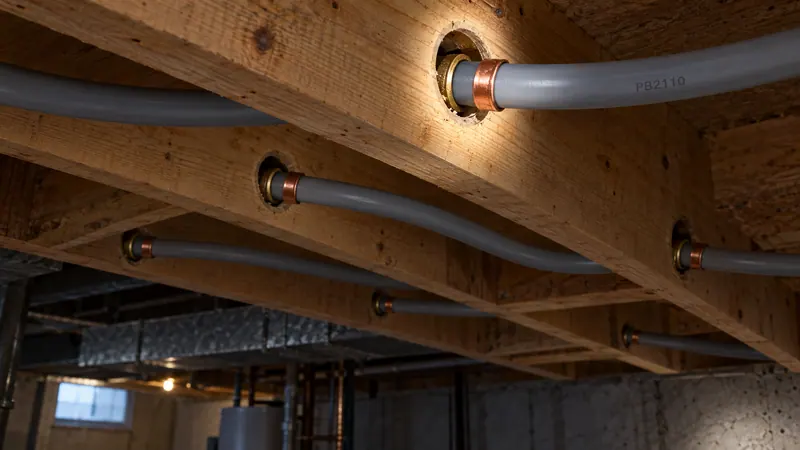
Use the year of construction as a first filter: GTA homes from roughly 1978 to the mid-1990s are the ones to look at.11 Then check exposed supply lines in the basement, utility room or crawl space for flexible grey plastic, often printed PB2110. An earlier home inspection report may already mention it. A plumber or home inspector can confirm the material; the identification guide covers each room.
Do I need a permit for poly-B replacement in Toronto?
Yes. Toronto Building requires a permit to install or modify a plumbing system, and a stand-alone plumbing permit application includes plumbing plans for each floor.34 Under the fee schedule effective January 1, 2026, single-family plumbing is charged at $23.20 per fixture, plus $214.79 for water services and buried piping.4 The work must be done by a plumber certified under Skilled Trades Ontario.7
What’s the difference between PEX-A, PEX-B, and PEX-C?
The letters describe how the polyethylene was cross-linked: the peroxide (Engel) method, the silane method and electron-beam irradiation. A design guide from the Plastics Pipe Institute notes that the letters are not a rating system and that pipe made by all three methods must meet the same standards.18 Ask your contractor which type and fitting system they use, and why.
Will poly-B replacement disrupt my home for long?
For a detached house, an Ottawa firm puts the plumbing at about two to three days, with drywall repair after that,13 and a national repiping guide gives three to seven business days including restoration, or two to three days for a condo or townhouse.12 Ask whether water will be restored at the end of each working day.
Does poly-B replacement affect home value in Toronto’s market?
Replacement removes an item a buyer’s inspector and insurer will ask about. We found no reliable GTA figure for how much poly-B lowers a sale price, so be wary of specific dollar claims. Keeping the permit and invoice lets you answer the question in writing.
Can I get financing or grants for replacement in Ontario?
We are not aware of a provincial program aimed at poly-B replacement. The usual routes are savings, a home equity line of credit or a personal loan, and some replacement contractors advertise monthly payment plans.20 Check with your municipality and, for a condo, your corporation before you start.
Sources
- Statistics Canada — 2021 Census Profile (98-316-X2021001): occupied private dwellings by period of construction, Toronto and GTA municipalities · accessed 2026-09-28
- City of Toronto Open Data — Neighbourhood Profiles, 2021 Census (158-neighbourhood model), occupied private dwellings by period of construction · accessed 2026-09-28
- City of Toronto — When do I need a building permit? (modified 21 July 2026) · accessed 2026-09-28
- City of Toronto — Stand-alone Plumbing & Drain Permits (fees effective 1 January 2026) · accessed 2026-09-28
- City of Toronto — Drinking Water System Annual Report 2025 (O. Reg. 170/03) · accessed 2026-09-28
- City of Toronto — Drinking Water Analysis Summary 2022 · accessed 2026-09-28
- Skilled Trades Ontario — Plumber (trade information) · accessed 2026-09-28
- Condominium Authority of Ontario — Repairs and maintenance · accessed 2026-09-28
- Siskinds LLP — Defective plastic pipes (polybutylene) used in plumbing and radiant heating (Ontario class action) · accessed 2026-09-28
- Government of Alberta, Municipal Affairs — Safety Tips: Polybutylene (Poly-B) Pressure Water Piping (reviewed August 2016) · accessed 2026-09-28
- ATCO Energy — Poly B Replacement, home services · accessed 2026-09-28
- Urban Piping — House Repiping Cost Guide (2026) · accessed 2026-09-28
- PatchBoyz (Ottawa) — Poly B plumbing, drywall repair and stipple removal · accessed 2026-09-28
- Square One Insurance — Poly-B plumbing: common issues, maintenance and more · accessed 2026-09-28
- Westland Insurance — Has your broker asked if you have Polybutylene (Poly-B) plumbing? (7 September 2023) · accessed 2026-09-28
- Insurance Bureau of Canada — Know your home’s history and the potential issues lurking within its walls (25 June 2025) · accessed 2026-09-28
- TD Insurance — What’s lurking behind the walls of your new dream home? (21 April 2010) · accessed 2026-09-28
- Plastics Pipe Institute et al. — Design Guide: Residential PEX Water Supply Plumbing Systems (November 2006) · accessed 2026-09-28
- BFL Canada Risk Control Engineering — Ask an Engineer No. 17: Polybutylene Piping Systems (March 2020), hosted by CHOA · accessed 2026-09-28
- Urban Piping — Poly B replacement in Calgary: packages and payment plans · accessed 2026-09-28
Keep going
Related guides
 Field guide · IdentificationThat grey pipe. Is it Poly-B?
 Repipe · Cost · OptionsReplacement Options & Cost Calculator
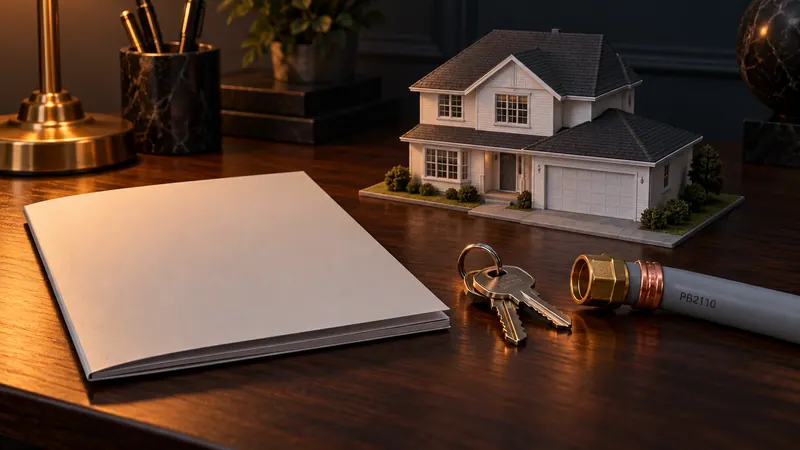 Coverage · Disclosure · RenewalAsk your insurer. Keep the answer.
 Vancouver & Lower Mainland, BC · City guideVancouver’s Complete Poly-B Replacement GuideOntario · City hubPoly-B Replacement in Toronto, ON
Updated 2026-09-28