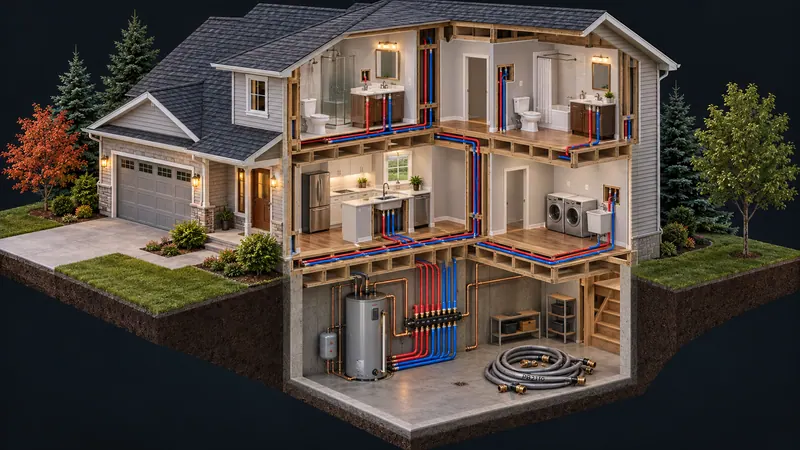
Repipe · Cost · Options
Replacement Options & Cost Calculator
Understand your options for replacing polybutylene plumbing and get an estimated cost for your home, with every published price traced back to the business that published it.
Start here
Do you have to replace poly-B?
No Canadian law orders you to tear out working poly-B. Building codes are not retroactive, and Alberta’s safety bulletin says plumbing that was acceptable when installed stays acceptable unless it poses a health or safety hazard.22 The pressure to replace comes from elsewhere: insurers asking about pipe material, buyers and their inspectors, and the fact that the pipe degrades from the inside where nobody can see it.19
A risk-engineering bulletin hosted by British Columbia’s condominium owners’ association sums up the choice. Lowering household water pressure and water-heater temperature can slow the damage, but it cannot stop it, and repiping with a chemically stable material such as PEX is the only permanent fix.19
This page covers what that repipe costs, what a crew actually does in your house, which materials and layouts are on the table, the permits involved, and how to read a quote. Polybutylene.ca does not do plumbing work. When you send a request, the HAUSE desk replies with next steps and, where available and with your consent, a local contractor.
Published numbers at a glance
Illustrative estimator
Estimate your replacement cost
Enter your home’s size, bathrooms and finish level to see a planning range built from published Canadian prices. It is an illustration, not a quote; only a site visit can price your house.
What the model shows, in words
What the estimator does
The calculator turns four facts about your home into a low and a high planning figure: finished floor area, number of bathrooms, whether the basement ceiling is finished, and the replacement material. It adds a per-square-foot amount for running new supply lines through the house to a per-bathroom amount for the fixtures, valves and connections each bathroom brings. The result includes typical drywall and paint patching, because most homeowners pay for that too. Figures are rounded to the nearest $500 and are shown before GST.
Where the numbers come from
The coefficients were fitted to a Calgary specialist’s published tiers that include restoration: $8,000–$12,000 for homes with one or two bathrooms, $12,000–$15,000 for two or three, and $15,000–$25,000 for three or more. Because that source counts bathrooms rather than square feet, the reference house sizes behind the fit are our own assumption. A 1,500 sq ft home with two bathrooms comes out at roughly $9,500 to $13,000, which sits inside the ranges other Alberta firms publish.
Finished basements and copper
Ticking “finished basement” adds $2,000. That is the top of one firm’s $500–$2,000 figure for drywall repair and repainting and the bottom of an Ottawa firm’s $2,000–$6,000 range for whole-home drywall after poly-B removal. Choosing copper multiplies the estimate by 1.6. Copper pipe costs roughly two and a half times as much per foot as PEX, and labour makes up about half the bill, so the multiplier scales only the materials share and leaves labour as it is.
What it leaves out
The estimator does not price CPVC, because no Canadian poly-B source we could find publishes a figure for it. It does not adjust for storeys, since no source isolates that effect; the bathroom count carries most of it. Radiant floor heating, slab-embedded lines, condominium coordination, stipple ceilings, travel to remote communities, permit fees and GST all sit outside the range. Treat the output as a budgeting anchor for comparing written quotes, not as a price you can hold anyone to.
Using it with real quotes
Run the estimator before contractors visit so you know whether a number is in the published neighbourhood. A quote well below the range usually leaves something out, often drywall, paint or a few runs of pipe; one well above may include upgrades or difficult access. Ask each firm to explain the gap line by line. When you are ready, the quote form on this page sends your home size, bathrooms, province and preferred material to the HAUSE desk.
Published replacement prices by province
Each row is a figure a business published about its own market. “Plumbing” excludes drywall and paint; “complete” includes them; “general repipe” comes from a guide covering all old pipe types, not only poly-B. Prices are before GST or HST unless noted.
| Province | Area | Range (CAD) | Scope | Published by |
|---|---|---|---|---|
| Alberta | Calgary | $5,000–$15,000 | Whole home | Lone Star Plumbing & Heating2 |
| Alberta | Calgary, Edmonton, Red Deer, Fort McMurray | $5,000–$15,000 or more | Whole home | ATCO Energy home services3 |
| Alberta | Calgary | $5,000–$8,000 + GST | Plumbing | Urban Piping, plumbing-only package4 |
| Alberta | Calgary | $10,000–$15,000 + GST | Complete | Urban Piping, full-service package4 |
| Alberta | Edmonton | $10,000–$20,000 | Whole home | Kingstree Plumbing, July 20257 |
| British Columbia | Vancouver area | $6,000–$12,000 | Plumbing (PEX) | Clearly Plumbing & Drainage8 |
| British Columbia | Vancouver area | $11,000–$22,000 | Complete | Clearly Plumbing & Drainage8 |
| British Columbia | Metro Vancouver | $2,000–$10,000 | Whole home, incl. permits | Whyte Plumbing, January 2024 (archived)11 |
| British Columbia | Vancouver | $8,000–$15,000 | General repipe | Urban Piping repiping guide, 20266 |
| Ontario | Ottawa | $3,000–$25,000 | Whole home | Dr. Pipe (Ottawa Plumber Now)10 |
| Ontario | Ottawa | $9,000–$15,000 | Plumbing | PatchBoyz9 |
| Ontario | Toronto | $8,000–$15,000 | General repipe | Urban Piping repiping guide, 20266 |
| Canada | National | $3,000–$25,000 | Whole home | Square One Insurance1 |
No Saskatchewan, Manitoba, Quebec, Atlantic or territorial poly-B prices were published by sources we could open; use the national range and local written quotes there. Contractor figures are marketing estimates, not audited prices.
Costs beyond the pipe
Restoration is where budgets slip. A whole-home repipe opens ceilings and walls, and someone has to close them again.
| Item | Published figure | Source |
|---|---|---|
| City of Calgary homeowner plumbing permit | $116.50 ($112 + 4% Safety Codes Council fee) | City of Calgary12 |
| City of Edmonton residential plumbing permit | $120 per address or unit + at least $4.80 safety code fee | City of Edmonton14 |
| Municipal permits, contractor estimate | $100–$500 | Kingstree Plumbing7 |
| Inspection fees | $150–$300 | Kingstree Plumbing7 |
| Drywall repair and repainting | $500–$2,000 | Urban Piping repiping guide6 |
| Whole-home drywall after poly-B removal, Ottawa | $2,000–$6,000 | PatchBoyz9 |
| Whole-home drywall, Vancouver area | $5,000–$10,000 | Clearly Plumbing & Drainage8 |
| Temporary accommodation | Listed as a possible cost, no amount given | Kingstree Plumbing; MyChoice724 |
| Basic water leak sensors | $10–$150 each | BC Housing21 |
Several firms restore water every evening so the household can stay home, which may make a hotel unnecessary. Ask before you budget for one.
What drives the price
| Factor | Why it moves the number |
|---|---|
| Home size and bathrooms | More fixtures mean more pipe, more connections and more openings to patch.25 |
| Access | An open or drop-tile basement ceiling is the cheapest route. Pipes behind finished drywall, under slabs or in tight crawlspaces cost more to reach and close up. Square One notes this is why Prairie homes with basements often cost less than west coast homes without them.16 |
| Basement finish and ceiling texture | Finished ceilings, knockdown or stipple texture and full-room repainting all add restoration time.49 |
| Material | Copper pipe runs about $10–$20 per linear foot against $4–$8 for PEX, and soldered joints take longer.6 |
| Local labour | Labour is typically 50–60% of a repipe, so regional rates matter; urban markets usually cost more.67 |
| Heating loops | Poly-B in radiant floor or hydronic heating is a separate job with its own permit in Calgary.413 |
| Upgrades bundled in | New shut-off valves, frost-proof hose bibs, braided supply hoses and water-hammer arrestors may be included or extra.4 |
| Whole home or partial | Partial work is quoted from about $1,500 but leaves poly-B in the walls.7 |
PEX vs copper vs CPVC
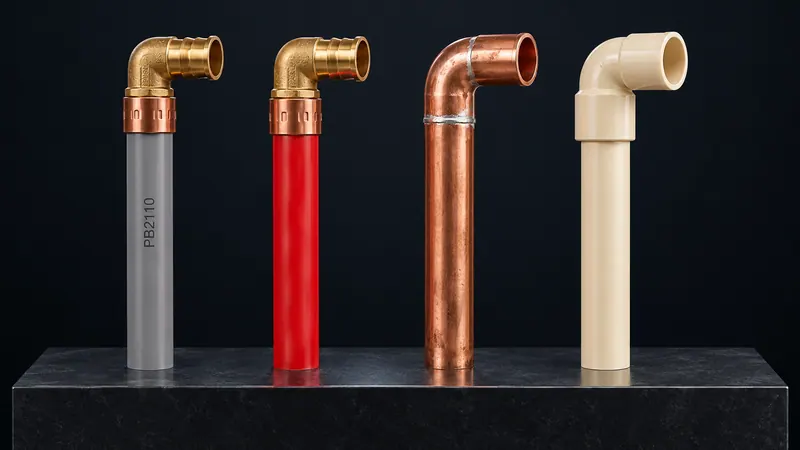
Three materials are approved for hot and cold water under the National Plumbing Code of Canada 2005, the edition that dropped polybutylene.18 The poly-B column shows what you are replacing.
Materials in practice
Why most Canadian repipes use PEX
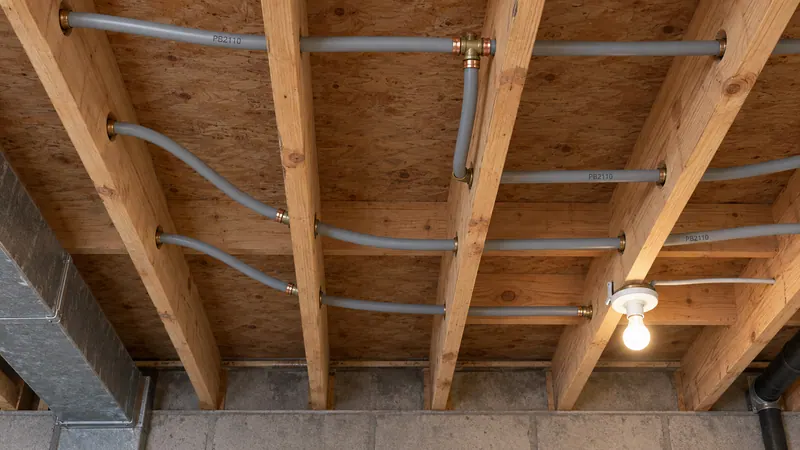
PEX dominates poly-B replacement for practical reasons. It comes in coils, so a plumber can snake one continuous length from the basement to an upstairs vanity with no joint hidden in the ceiling. It does not rust or build up scale, and it copes with a frozen line better than rigid pipe.107 Most manufacturers back the tubing with a 25-year warranty.6 Look for the rating code printed on the pipe: the first two digits describe chlorine and UV resistance, and potable-water PEX should carry at least “PEX 1006” along with CSA B137.5.27
Copper still earns its place. It has decades of service history, does not leach into the water, is fully recyclable and looks tidy on exposed runs.106 The trade-offs are cost, slower soldered joints, and pinhole leaks that can develop as copper ages in some water supplies.21
CPVC is code-approved for hot and cold water, but its allowable pressure falls as the water gets hotter, and every change of direction needs a cemented fitting.18 Poly-B specialists rarely quote it; the firms we reviewed offer PEX or copper.79
Layout
Home-run manifold, trunk-and-branch, or a hybrid
Replacing poly-B is also a chance to change how water reaches each fixture. The Plastics Pipe Institute’s residential design guide compares three layouts and says all three are code approved and deliver enough flow and pressure in a normal house.16
- Trunk-and-branch copies the old poly-B layout: larger mains with smaller branches teed off to each room. It uses the least pipe and gives strong pressure at a single fixture, but needs the most fittings and joints.16
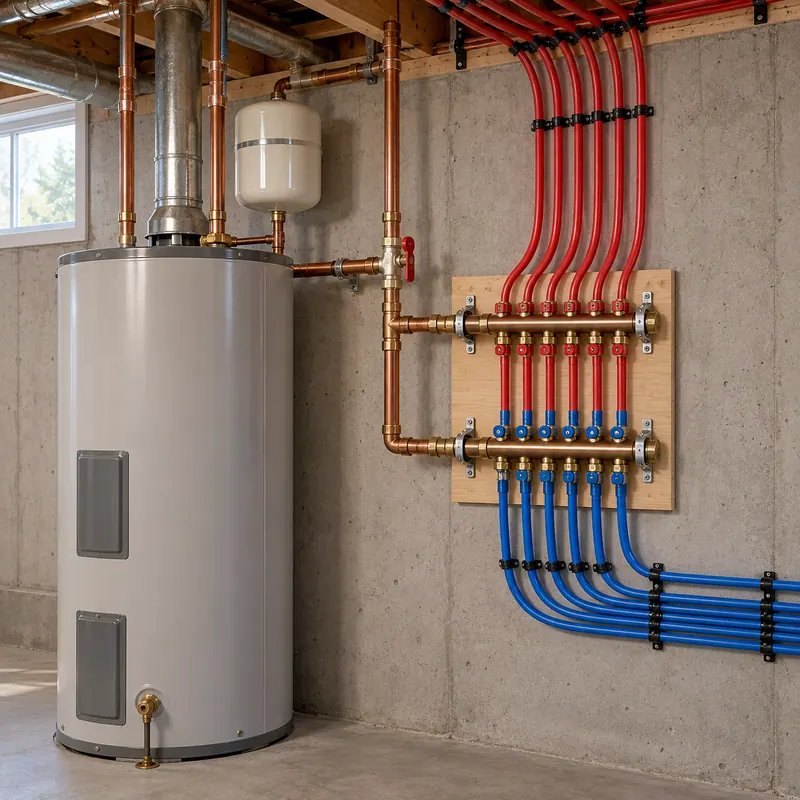
- Home-run (parallel) manifold runs a dedicated line from a central manifold to every fixture. It uses the most pipe but the fewest fittings, gives each fixture its own shut-off at the manifold, holds pressure steadiest when several taps run, and cuts the wait for hot water.16
- Zone or hybrid puts small manifolds near groups of fixtures, landing between the two.16
For a retrofit, the right answer depends on where the plumber can open ceilings. Ask each contractor which layout they propose and where the shut-offs will be.
What a repipe looks like, day by day
Crews differ, but published schedules from Calgary, Ottawa and Vancouver-area firms follow the same arc. Plumbing usually takes two to three days; restoration takes longer.489
Before day one: assessment, quote and permit
A plumber confirms the pipe really is poly-B (some grey pipe is not), counts fixtures, finds the main shut-off and the water heater, and notes the ceiling finish.9 You get a written quote. In Calgary the contractor, not the homeowner, applies for the plumbing permit when a firm does the work.12
Day 1: protect the house and open access
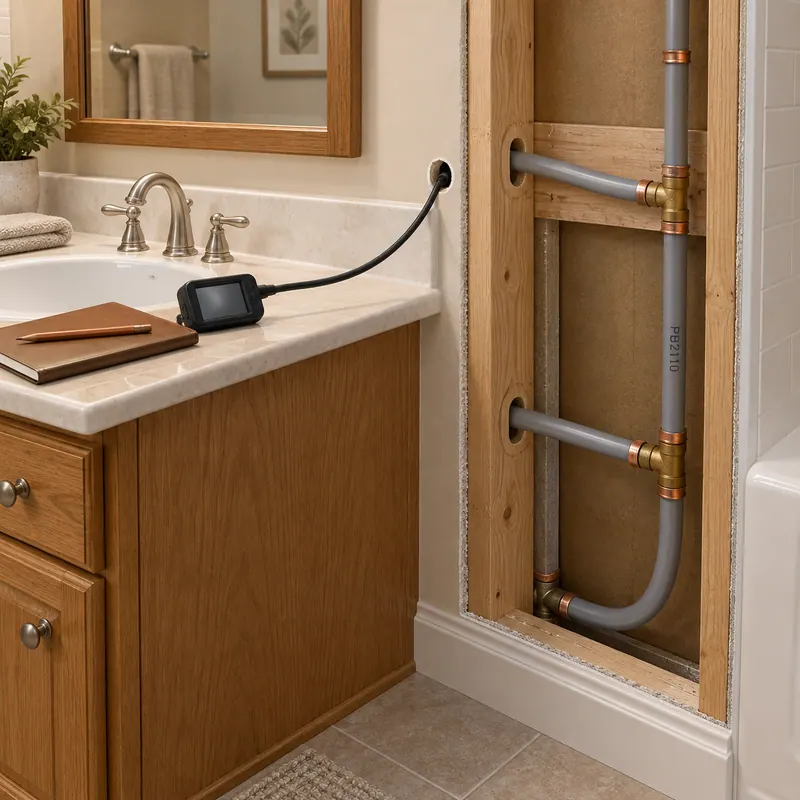
Floors, carpets and furniture are covered and work zones sealed off, then the crew cuts access openings in ceilings and walls along the pipe routes.4 Careful crews plan routes to make as few holes as possible, which saves on patching later.9
Days 1–3: pull poly-B and run new lines
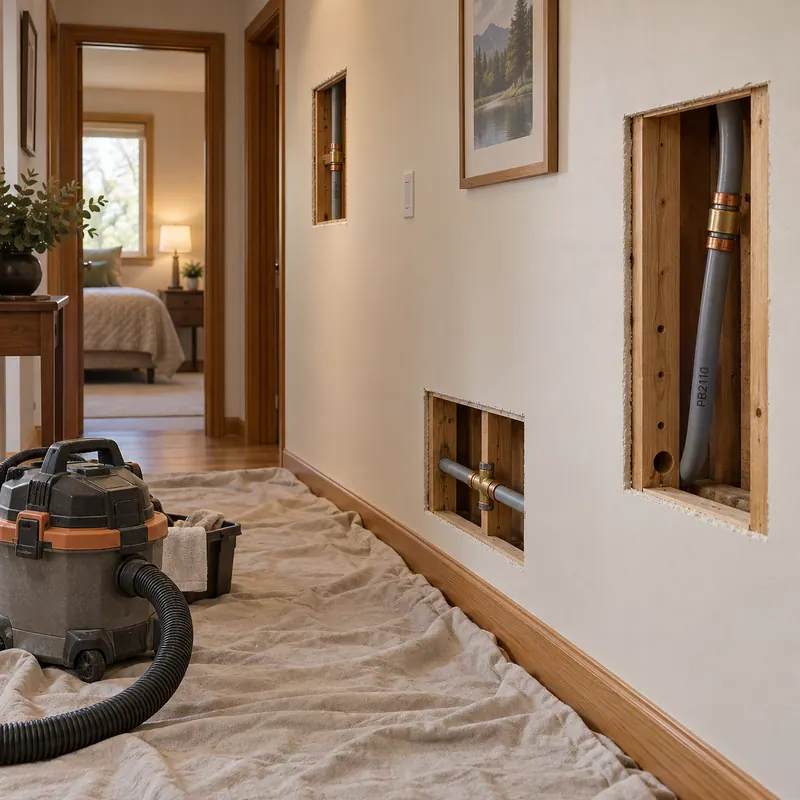
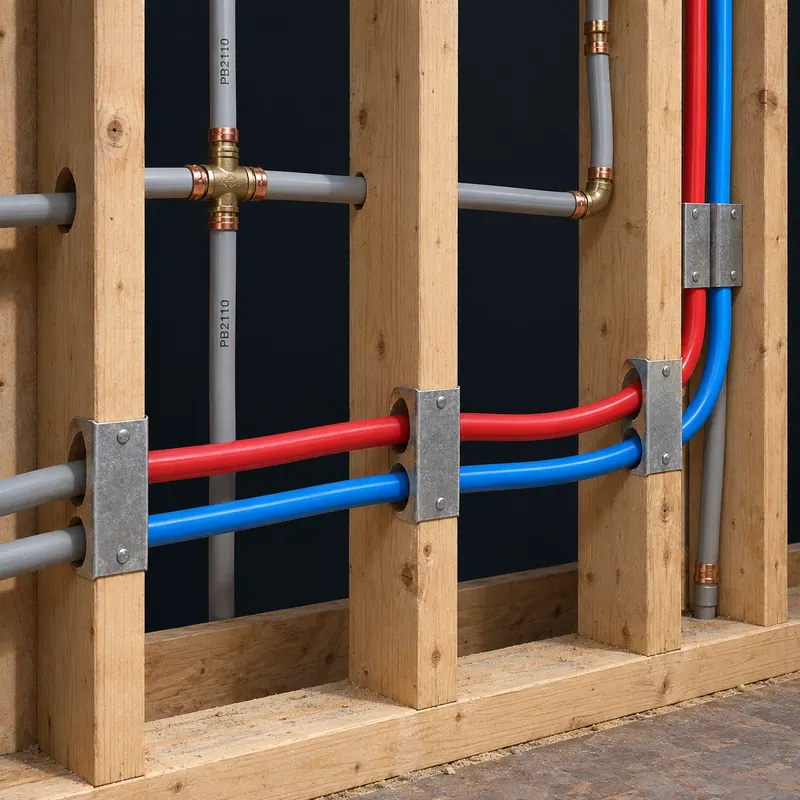
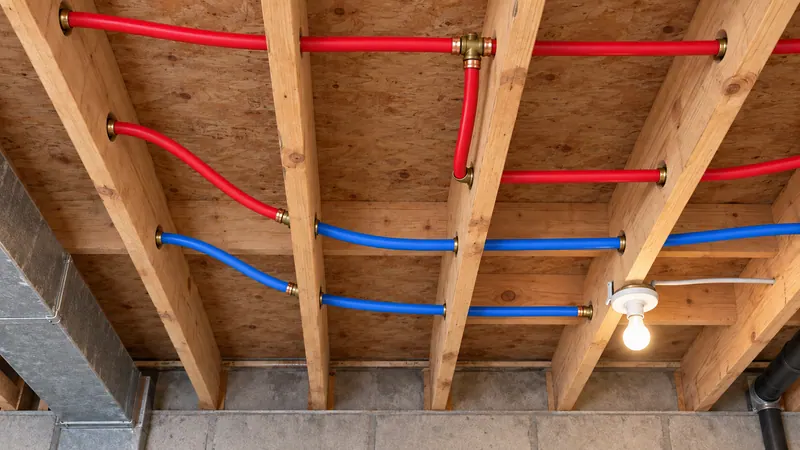
Grey poly-B and its crimp fittings come out and new PEX or copper goes in, often with new shut-off valves, frost-proof outdoor faucets and water-hammer arrestors for appliances.4 Water is off while connections are made; many crews restore it at the end of each working day so you can stay home.6
Connect, pressure-test and inspect
Lines are tied into a manifold or trunk, the whole system is pressure-tested for leaks, and the municipal inspector checks the work before walls close.613 Edmonton warns that skipping a required inspection can mean removing finished walls later.14
Days 4–10: patch, paint and walk through
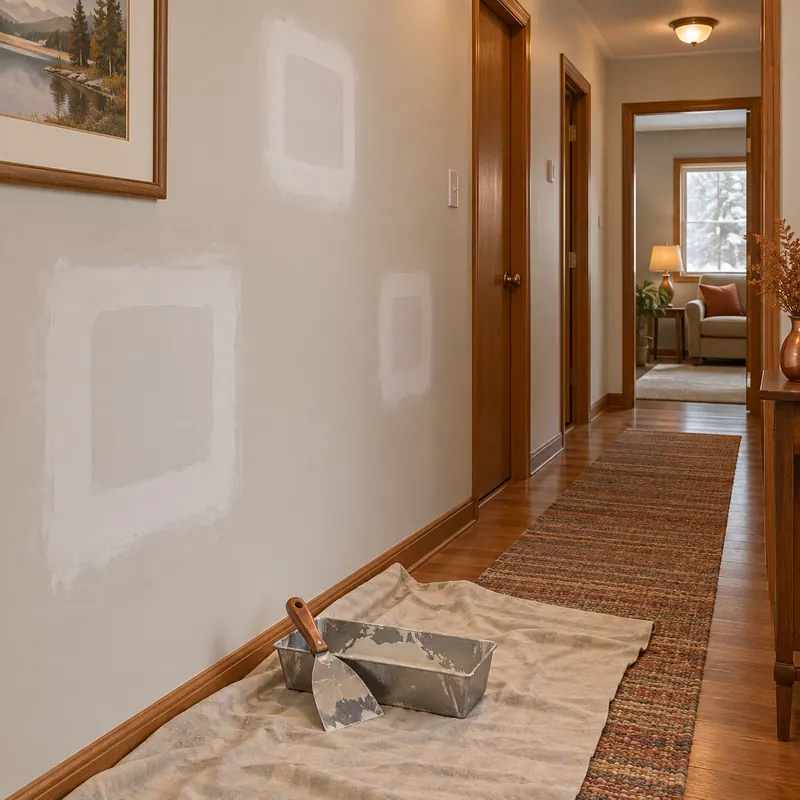
Openings are boarded, taped, given several coats of compound, sanded, primed and painted to match; textured ceilings take extra passes.94 Even good patches can show under raking light, so some owners repaint whole rooms.4 Finish with a walk-through and keep the permit, inspection record, invoice and photos.24
Animated walkthrough
A five-day repipe in one house
Scrub through a simplified two-storey house as its poly-B is replaced. Schedules vary by crew and home; this one is illustrative.
What the model shows, in words
Setting the scene
The animation follows a two-storey house with a basement, a kitchen, a laundry room and two and a half bathrooms, all fed by grey poly-B from a main shut-off near the water heater. Grey lines show the original supply pipe. As the timeline advances, those lines are removed and new red and blue PEX lines take their place. The day counter at the top is a simplified schedule assembled from contractor timelines published in Calgary, Ottawa and the Vancouver area, not a promise about any particular crew.
Day one: protection and openings
Drop sheets appear on floors and furniture, and small rectangular openings are cut in the basement ceiling and in walls behind fixtures. Each opening is placed to reach a run of pipe with the least disturbance. Many crews aim for a handful of holes per room rather than long trenches, because every opening becomes a drywall patch later. In a home with an unfinished basement ceiling, most of the horizontal runs are reachable without cutting anything at all.
Days two and three: the swap
Grey lines fade as they are pulled, and new tubing is threaded through the same openings. In the manifold view, each fixture gets its own line from a panel in the basement; in the trunk-and-branch view, larger mains feed smaller branches. Water comes back on at the end of each working day, shown by the taps lighting up. Once every fixture is connected, the model runs a pressure test and highlights any joint that would need attention.
Day four: inspection and closing up
An inspector icon signs off the open work before any wall is closed; in Calgary and Edmonton a plumbing permit is required when water lines are replaced. Then patches go over each opening. Drywall compound needs drying time between coats, which is why restoration usually takes longer than the plumbing itself. The model compresses those coats into one step so the whole job fits on screen.
Day five and after: paint and paperwork
Patched areas are primed and painted, protection comes up, and the final frame shows the house with no grey pipe left. A document stack collects the permit, inspection record, invoice, photos and a letter describing what was replaced. Those are what insurers, buyers and future plumbers will ask for. Larger homes and full-service jobs with painting can run to two weeks; smaller homes and condos can finish sooner.
Permits
Permits and inspections
Replacing supply piping is not a like-for-like repair in the eyes of most building departments.
- Calgary: a plumbing permit is required when a plumbing system is constructed, extended or altered, including replacing water and sewer lines; fixing a leak or swapping a faucet does not need one. Homeowners can pull a permit only for work they do themselves in a home they own and live in, so a hired contractor applies for its own. Inspections are booked through 311 or the City’s online permit account.1213
- Edmonton: a permit is required under the provincial Safety Codes Act to install or alter water piping, contractors must be licensed with the City, and inspections are booked after the permit is issued.14
- Vancouver: the City says a plumbing permit is required for most work on plumbing systems.15
- Elsewhere: ask your municipal building department before work starts, and ask each quoting contractor who will apply for the permit and book the inspections.
A permit and a passed final inspection also give you something concrete to show an insurer or a future buyer.
How to compare replacement quotes
Put two or three written quotes side by side and tick off what each one answers.
0 of 12 checked
Scope
Partial or full replacement?
Fixing one failed section is possible. New poly-B fittings are no longer made, so a plumber cuts out the damaged length and transitions to copper or PEX.2 Partial jobs are quoted from about $1,500.7
The catch is what stays behind. A partial repipe leaves poly-B in walls and ceilings, and insurers commonly ask what share of the plumbing is each material. For a home that was partly updated, buyers are told to ask for photos, invoices, permits and a map of exactly which runs were replaced.124 One Calgary replacement firm goes further and says insurers want every length removed; that is a contractor’s view, so check what your own insurer requires before choosing a partial scope.4
A staged approach can still make sense when budgets are tight: replace the most exposed runs first (near the water heater and in finished ceilings), document each stage, and schedule the rest.
Condominiums and strata
Condos, townhouses and strata buildings
In a multi-unit building, the first question is who owns the pipe. British Columbia’s condominium owners’ association explains that responsibility for a service line depends on where it runs, how it is metered, whether it can serve another unit, and what the bylaws and strata plan say.20 BC Housing adds that strata corporations maintain the piping in common property.21 Buyers are advised to learn which piping belongs to the unit before assuming responsibility for repairs.24
Many strata councils decide it is cheaper and more predictable to replace every unit’s lines under one contract, sometimes after adopting a bylaw to do it.20 If yours is considering that, ask how the work will be funded and scheduled before you replace your own unit alone.
Permits follow the building type too. In Calgary, owners of apartment-style condos cannot take out homeowner permits and must hire a licensed contractor; owners of row-type condo townhouses can, with written authorization from the condo board, for their own unit only.12 An automatic water shut-off device has to go on the building’s main, so in a multi-unit building that is a conversation with the property manager or strata council.21
Money
Paying for it, and where insurance fits
Home insurance generally will not pay to replace sound poly-B. Standard policies cover the sudden and accidental escape of water from plumbing, while gradual deterioration is not an insured peril, so planned replacement is treated as the owner’s upkeep.23 Being covered for water damage after a leak is not the same thing as being covered for new pipe.24 Compensation from the North American class actions is also closed: the claims deadline in Canada was May 31, 2005, or up to 15 years after installation.22
That leaves the usual ways of paying for a renovation. An Edmonton plumbing firm lists home-equity loans, personal lines of credit and contractor payment plans, and suggests asking your municipality whether any home-repair loan or grant applies.7 Compare the true cost of contractor financing against your bank’s rate before signing.
Replacement can still pay off on the insurance side: once the work is permitted and documented, you can ask your insurer or broker whether any poly-B surcharge, water-damage deductible or renewal condition can be removed. See the insurance guide for what to send them.
Buying and selling
Replacement and resale
Buyers are routinely told to have a plumber inspect a poly-B home, get a written estimate, and either deduct the cost from the offer or ask the seller to replace the system before closing, while making sure the home can be insured in the meantime.1 A written estimate that breaks out plumbing, access, drywall, paint, temporary accommodation and permits gives both sides something concrete to negotiate over.24
Sellers who have already replaced should gather the permit, the passed final inspection, the invoice, before-and-after photos and a letter from the contractor describing what was removed. Whether and how poly-B must be disclosed in a sale depends on your province and your listing documents, so ask your REALTOR® or lawyer rather than relying on a general rule.
Quebec and Atlantic Canada
Quebec: a 2015 Quebec renovation guide reports little evidence of premature poly-B failure in the province, linking this to low chlorine in municipal water and to copper fittings used since 1986. Replacement costs are not published there, so use the national range; the urgency may be lower, but get a local plumber’s view of your own system.25
Atlantic Canada: published cost data is limited, so estimates rest on national figures. A Halifax home inspector writes that plumbers he has spoken with rarely recommend replacing a copper-fitted system that shows no sign of leaks. Get several local quotes and your insurer’s position before deciding.26
Not replacing yet?
Until you repipe, the bulletin hosted by British Columbia’s condominium owners’ association suggests keeping household pressure below 60 psi and water-heater temperature around 55–60 °C to slow the damage, while being clear that this does not prevent failure.19 Know where your main shut-off is and test it, and consider leak sensors or an automatic shut-off valve.21
HAUSE desk · Request
Get Replacement Quote
Tell the HAUSE desk about your home: size, bathrooms, province, city and preferred material. The desk replies with next steps and, where available and with your consent, a local contractor who can price the job in writing.
- 01A person reads itThe HAUSE desk reviews the age of the home, what you found and how urgent it is.
- 02You get a replyBy email from info@hause.ca or by phone from 403-679-3100, with practical next steps.
- 03Matched where availableWith your consent, your request goes to a local replacement contractor so they can quote.
- 04You decideNo obligation. Use the guides and the cost calculator to compare what you are quoted.
Questions · 7
Frequently asked questions
How much does it cost to replace poly-B in Canada?
How long does a poly-B repipe take, and can we stay home?
Does a poly-B repipe need a building permit?
Should I choose PEX or copper?
Is a partial poly-B replacement worth it?
Will my home insurance pay for replacement?
Usually not. Policies cover sudden, accidental water damage, not wear or planned upgrades, so replacing sound pipe is normally your cost.23 Documented replacement may help you remove a surcharge or condition at renewal.
Sources
- Square One Insurance — Poly-B plumbing: common issues, maintenance and more · accessed 2026-09-28
- Lone Star Plumbing & Heating (Calgary) — Poly B Pipe Replacement · accessed 2026-09-28
- ATCO Energy — Poly B Replacement, Alberta home services · accessed 2026-09-28
- Urban Piping — Poly B replacement in Calgary: process and packages · accessed 2026-09-28
- Urban Piping — Understanding the financial outlay for Poly B replacement projects · accessed 2026-09-28
- Urban Piping — House Repiping Cost Guide (April 2026, updated July 2026) · accessed 2026-09-28
- Kingstree Plumbing (Edmonton) — Replacing Poly B Piping: Essential Guide for Canadian Homeowners (10 July 2025) · accessed 2026-09-28
- Clearly Plumbing & Drainage — Is Poly B Piping Covered by Home Insurance? · accessed 2026-09-28
- PatchBoyz (Ottawa) — Poly B plumbing, drywall repair and stipple removal · accessed 2026-09-28
- Dr. Pipe / Ottawa Plumber Now — Poly B plumbing · accessed 2026-09-28
- Whyte Plumbing — Signs you need a poly b pipe replacement (Internet Archive copy, 23 January 2024) · accessed 2026-09-28
- City of Calgary — Homeowner electrical and plumbing permits · accessed 2026-09-28
- City of Calgary — Plumbing and gas permits · accessed 2026-09-28
- City of Edmonton — Plumbing Permits, Residential · accessed 2026-09-28
- City of Vancouver — Plumbing permits (permit system help) · accessed 2026-09-28
- Plastics Pipe Institute — Design Guide: Residential PEX Water Supply Plumbing Systems, 2nd ed., Chapter 7 System Design · accessed 2026-09-28
- Plastics Pipe Institute et al. — Design Guide: Residential PEX Water Supply Plumbing Systems (November 2006) · accessed 2026-09-28
- National Research Council of Canada — National Plumbing Code of Canada 2005 · accessed 2026-09-28
- BFL Canada, Ask an Engineer No. 17 (March 2020) — Polybutylene piping systems, hosted by CHOA · accessed 2026-09-28
- CHOA — Condo Smarts bulletin 300-512: Service lines and strata (9 December 2012) · accessed 2026-09-28
- BC Housing — Maintenance Matters No. 21: Preventing Water Leaks in Your Home · accessed 2026-09-28
- Government of Alberta, Municipal Affairs — Safety Tips: Polybutylene (Poly-B) Pressure Water Piping (reviewed August 2016) · accessed 2026-09-28
- Insurance Bureau of Canada — Types of home insurance coverage · accessed 2026-09-28
- MyChoice — An Insurance Guide to Poly-B Plumbing (updated 24 September 2026) · accessed 2026-09-28
- Guide Perrier — Tuyaux de polybutylène : est-ce une plomberie à risque? (Yves Perrier, 2015) · accessed 2026-09-28
- Inside Edge Home Inspections (Halifax) — Polybutylene (Poly-B) pipe · accessed 2026-09-28
- Plastics Pipe Institute — Plastic Pressure Pipe Materials in US/Canada (presentation to the ICC 815 committee, 30 October 2023) · accessed 2026-09-28
Keep going
Related guides

Updated 2026-09-28